



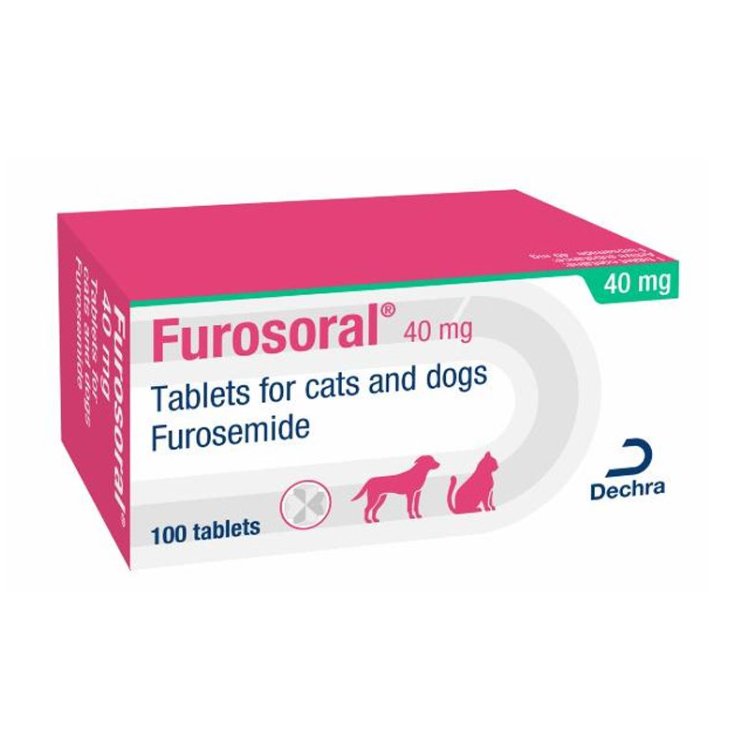


Furosoral Tablets for cats ad dogs POM-V
Product Description
Furosoral tablets for cats and dogs
Species:Cats, Dogs
Active ingredient:Frusemide (Furosemide)
Product:Furosoral tablets for cats and dogs
Clinical particulars
Target species
Cats and dogs
Indications for use
Treatment of hydrothorax, hydropericardium, ascites and oedema, particularly associated with cardiac insufficiency and renal dysfunction.
Contraindications
Do not use in animals suffering from hypovolaemia, hypotension or dehydration.
Do not use in cases of renal failure with anuria.
Do not use in cases of electrolyte deficiency.
Do not use in cases of known hypersensitivity to furosemide, sulphonamides or any of the excipients.
Do not use in acute glomerular nephritis.
Do not use in patients that have received excessive doses of cardiac glycosides.
Do not use in combination with other loop diuretics
Special warnings for each target species
Therapeutic efficacy may be impaired by increased intake of drinking water. Where the animal’s condition permits, water intake should be restricted to physiologically normal levels during treatment.
Special precautions for use
Special precautions for use in animals
Furosemide should be used with caution in the case of pre-existing electrolyte and/or water imbalance, impaired hepatic function (may precipitate hepatic coma) and diabetes mellitus.
In case of prolonged treatment, hydration status and serum electrolytes should be monitored frequently.
1-2 days before and after commencement with diuretics and ACE inhibitors renal function and hydration status should be monitored.
Furosemide should be used with caution in patients with nephrotic syndrome.
Special precautions to be taken by the person administering the veterinary medicinal product to animals
Furosemide has possible genotoxic properties and there is evidence of carcinogenicity in mice. Although there is inadequate evidence relating to these effects in humans, skin contact with or accidental ingestion of the product should be avoided. Wear impervious gloves during handling and administration of the product and wash hands thoroughly afterwards.
Each time an unused part-tablet is stored until next use, it should be returned to the open blister space and inserted back into the cardboard box. The product should be stored safely, out of the sight and reach of children. In case of accidental ingestion, seek medical advice immediately and show the package leaflet or the label to the physician.
People with known hypersensitivity to furosemide and other ingredients in the product should avoid contact with the veterinary medicinal product. Do not handle this product if you know you are sensitive to sulphonamides as hypersensitivity to sulphonamides may lead to hypersensitivity to furosemide. If you develop symptoms following exposure such as a skin rash, you should seek medical advice and show the doctor this warning. Swelling of the face, lips or eyes or difficulty with breathing are more serious symptoms and require urgent medical attention. Wash hands after use.
Adverse reactions
In rare (more than 1 but less than 10 animals in 10,000 animals treated) cases, soft faeces may occur. This sign is transient and mild and does not necessitate the withdrawal of the treatment.
Due to the diuretic action of furosemide, in rare cases there may be hemoconcentration and impairment of the circulation. In cases of prolonged treatment electrolyte deficiency (including hypokalemia, hyponatremia) and dehydration may rarely occur.
Use during pregnancy, lactation or lay
Laboratory studies have shown evidence of teratogenic effects.
The safety of the product has not been established during pregnancy or lactation. However furosemide is excreted into milk.
In pregnant and lactating animals, use only according to the benefit/risk assessment by the responsible veterinarian.
A deleterious effect on lactation is to be expected, particularly if drinking water is restricted.
Interaction with other medicinal products and other forms of interaction
In cats, do not use furosemide with ototoxic antibiotics.
Concurrent use with drugs affecting electrolyte balance (corticosteroids, other diuretics, amphotericin B, cardiac glycosides) requires careful monitoring.
Concomitant use with aminoglycosides or cephalosporins may increase the risk of nephrotoxicity.
Furosemide may increase the risk of sulfonamide cross-reactivity.
Furosemide may alter insulin requirements in diabetic animals.
Furosemide may reduce the excretion of NSAIDs.
The dose regimen may need to be reduced for long term treatment in combination with ACE inhibitors, depending upon the animal’s response to therapy
Amounts to be administered and administration route
For oral administration.
The recommended starting dose is 2.5- 5 mg furosemide per kg bodyweight per day, corresponding to ½ - 1 tablet per 2 kg bodyweight. In severe oedematous or refractory cases, the daily dose may initially be doubled. For maintenance, daily dosage should be adapted to the lowest effective dose by the veterinarian depending on the clinical response of the dog/cat to the therapy.
If treatment is administered last thing at night this may result in inconvenient diuresis overnight.
Overdose (symptoms, emergency procedures, antidotes), if necessary
Doses higher than recommended may cause transitory deafness, electrolyte and water balance problems, CNS effects (lethargy, coma, seizures) and cardiovascular effects (hypotension, heart rhythm disorders, collapse), especially in old and weakened animals. Treatment is symptomatic.
Withdrawal period(s)
Not applicable.
Loyalty Scheme
Earn up to 42 loyalty points with this product.
Share
Furosoral Tablets for cats ad dogs POM-V
Facebook Twitter Email Pinterest Telegram