



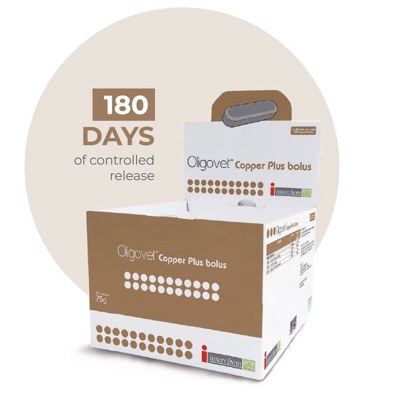
Oligovet Copper Bolus (20 x 75g)
Product Description
Description
Clinical signs of copper deficiency can result in an array of adverse effects which can include reduced growth rates, decreased feed conversion, abomasal ulcers, lameness, poor immune function,
sudden death and impaired reproductive function (Puls, 1994).
Zinc is an essential mineral that is required by all cells in animals. Zinc plays a role in numerous enzymatic reactions. Deficiencies of Zn are associated with reduced growth, poor immune function,
diminished reproductive performance, and poor offspring viability. As Zn status is reduced, along with stress (which can lead to a further depression in Zn status as noted by Orr et al., 1990), a reduction
in immune response and compromise of skin integrity the mammary glands natural defence system is weakened. This results in higher somatic cell counts and increased incidence of mastitis.
A critical moment in the availability of selenium in the female is the end of gestation and during lactation, in which females transfer the element to foetuses (placental transfer) and offspring
(colostrum and milk). In ruminants, placental transfer of Se happens even in deficient females, who sacrifice their own condition to provide Se to the foetus (Koller et al., 1984; Rock, 1998; Abd
El-Ghany et al., 2007, 2008). Selenium deficiency in ruminants has been related to a variety of adverse effects on growth, reproduction, immune response, foetal development and muscle tissue (Hogan,
et al., 1993). “White muscle disease”, a necrosis and scarring of cardiac and/ or skeletal muscle, is linked to severe Se deficiency (Hostetler, et al., 2003).
Presentation:
20’s x 75g (box of 20)
Protocol:
Young stock should receive 1 bolus at turnout to grass, cattle over 400kg should receive 2 boluses at turnout to grass.
Loyalty Scheme
Earn up to 76 loyalty points with this product.

Share
Oligovet Copper Bolus (20 x 75g)
Facebook Twitter Email Pinterest Telegram